
2026
Bourban, Michel
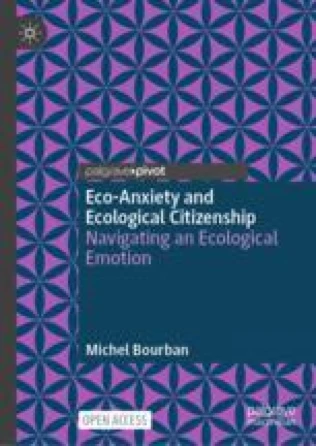
Eco-Anxiety and Ecological Citizenship Book
1, Palgrave Macmillan Cham, 2026.
Abstract | Links | BibTeX | Tags: Anthropocene, Eco-anxiety, Ecological citizenship, Emotions, Risks, Values
@book{nokey,

title = {Eco-Anxiety and Ecological Citizenship},

author = {Michel Bourban},

doi = {10.1007/978-3-032-03219-5},

year  = {2026},

date = {2026-02-26},

urldate = {2026-02-26},

number = {133},

publisher = {Palgrave Macmillan Cham},

edition = {1},

abstract = {This Open Access book offers a philosophical exploration of eco-anxiety. As knowledge about the rapidly degrading living conditions on Earth becomes more accurate, the impacts of environmental problems become more visible, and Anthropocene scenarios proliferate in films, television series, and novels, eco-anxiety emerges as a global and socially widespread phenomenon. Given the scale and severity of planetary boundary transgressions, feeling anxious about the future of human and non-human life has become a fitting emotional response. But what exactly is eco-anxiety? And how can we address its adverse effects on mental health and harness its constructive behavioural responses? This book answers these questions by developing an in-depth conceptual analysis of the notion of eco-anxiety and explaining how ecological citizenship, with its focus on hope, carbon sobriety, and courage, can help us live with eco-anxiety.},

keywords = {Anthropocene, Eco-anxiety, Ecological citizenship, Emotions, Risks, Values},

pubstate = {published},

tppubtype = {book}

}
This Open Access book offers a philosophical exploration of eco-anxiety. As knowledge about the rapidly degrading living conditions on Earth becomes more accurate, the impacts of environmental problems become more visible, and Anthropocene scenarios proliferate in films, television series, and novels, eco-anxiety emerges as a global and socially widespread phenomenon. Given the scale and severity of planetary boundary transgressions, feeling anxious about the future of human and non-human life has become a fitting emotional response. But what exactly is eco-anxiety? And how can we address its adverse effects on mental health and harness its constructive behavioural responses? This book answers these questions by developing an in-depth conceptual analysis of the notion of eco-anxiety and explaining how ecological citizenship, with its focus on hope, carbon sobriety, and courage, can help us live with eco-anxiety.
2025

Bourban, Michel
Rethinking Climate Justice: Toward Ecological Limitarianism Journal Article
In: Ethics, Policy & Environment, 2025.
Abstract | Links | BibTeX | Tags: Climate justice, Ecological citizenship, Limitarianism, Planetary justice, sufficientarianism
@article{nokey,

title = {Rethinking Climate Justice: Toward Ecological Limitarianism},

author = {Michel Bourban},

url = {https://www.esdit.nl/wp-content/uploads/Rethinking-Climate-Justice-Toward-Ecological-Limitarianism-1.pdf},

doi = {10.1080/21550085.2025.2574219},

year  = {2025},

date = {2025-11-10},

urldate = {2025-11-10},

journal = {Ethics, Policy & Environment},

abstract = {This article argues that climate justice should be discussed from a limitarian perspective and that limitarianism should be extended from wealth limitarianism to ecological limitarianism. It shows how egalitarian and sufficientarian considerations on climate change mitigation can be combined with an ecological limitarian approach to climate justice. This approach is built on a distinction between an institutional level composed of carbon markets and sufficiency policies and an individual level composed of ecological citizenship and a sustainable carbon footprint. To develop individual limitarianism, the article draws on virtue ethics and frames carbon sobriety as a key green virtue of ecological citizens.},

keywords = {Climate justice, Ecological citizenship, Limitarianism, Planetary justice, sufficientarianism},

pubstate = {published},

tppubtype = {article}

}
This article argues that climate justice should be discussed from a limitarian perspective and that limitarianism should be extended from wealth limitarianism to ecological limitarianism. It shows how egalitarian and sufficientarian considerations on climate change mitigation can be combined with an ecological limitarian approach to climate justice. This approach is built on a distinction between an institutional level composed of carbon markets and sufficiency policies and an individual level composed of ecological citizenship and a sustainable carbon footprint. To develop individual limitarianism, the article draws on virtue ethics and frames carbon sobriety as a key green virtue of ecological citizens.